
Published 17/02/2026
Moa Point Public Health advice
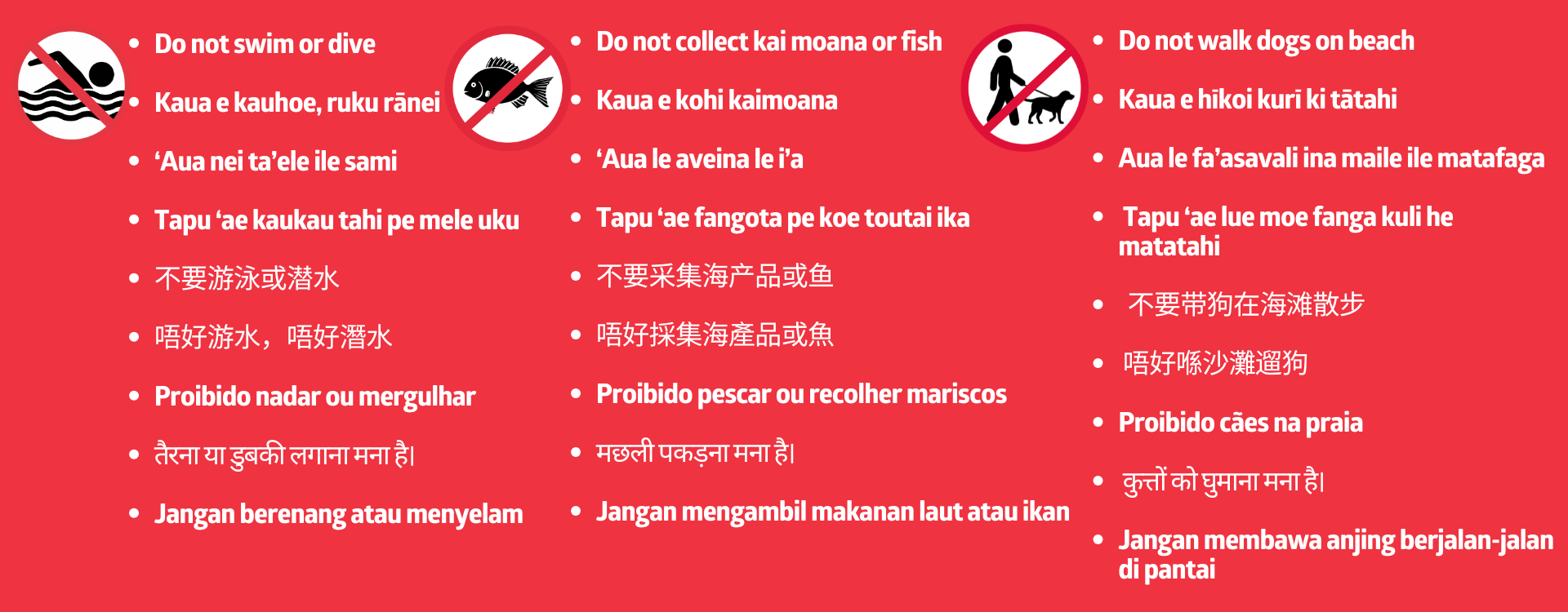
Public health advice remains consistent: Untreated wastewater poses a high risk to public health. Public health advice is to avoid beaches along the south coast of Wellington.
In windy conditions, there is a low risk that sea spray containing bugs could cause illness. It is best to avoid areas close to the area where the sewage is discharging when the wind is blowing sea spray onto the shore. In conditions with large wave action and strong wind, as a precaution keep windows closed. The biggest risk to health is from direct contact with the water such as swimming.
If you develop symptoms such as vomiting, diarrhoea, fever, cough, rash, irritation of the ear, nose or throat, seek medical attention and inform the healthcare provider of your possible contact with sewage. Healthline is a free over-the phone health service available 24 hours a day, 7 days a week on 0800 611 116.
Additional context
- Sampling provides a snapshot of water conditions. Results can vary significantly even across samples taken in close proximity of time or location.
- That is why we cannot draw conclusions about current conditions from one day’s data.
- In addition, Moa Point wastewater treatment plant continues to discharge screened, but untreated, wastewater into the environment via the long outfall pipe.
- Given these factors, the risk to public health from swimming, surfing, boating or gathering and eating kai moana remains too unpredictable to change the current guidance.
- Water sampling results are only one component used to assess the overall public health risk. Wellington Water is working with Wellington City Council, Greater Wellington Regional Council, Health NZ and technical experts to regularly review this guidance.
- Keeping people safe is our number one priority, and so public health officials recommend people follow the current advice to avoid getting sick.
- There is no evidence to suggest the discharge from Moa Point Treatment Plant is reaching the inner harbour.
- LAWA remains the best source of information for safe swimming at beaches outside the rāhui area.
- Avoid swimming for at least 2-3 days after heavy or prolonged rain, even for sites that have good water quality.
Editor notes
Wellington Water is owned and fully funded by Wellington City Council, Hutt City Council, Porirua City Council, and Upper Hutt City Council, Greater Wellington Regional Council and South Wairarapa District Council. All six councils are equal shareholders.
Our councils own the water infrastructure in the region, and they task us to manage the infrastructure and deliver water services to our communities.
Wellington Water is governed by a Board of Directors. The Board and our organisation receive overall leadership and direction from the Wellington Water Committee, which are also responsible for appointing members to the Board.
The Wellington Water Committee is made up of representatives from our council owners and mana whenua.